The Node Material Editor
Creating Shaders The Easy Way
Creating shaders can be a dense and complicated process, often requiring knowledge of GLSL and a strong understanding of how shaders work. Starting with Babylon.js 4.1, the Node Material Editor was introduced. This visual editor lets you connect blocks together to make shaders. It's really that simple.
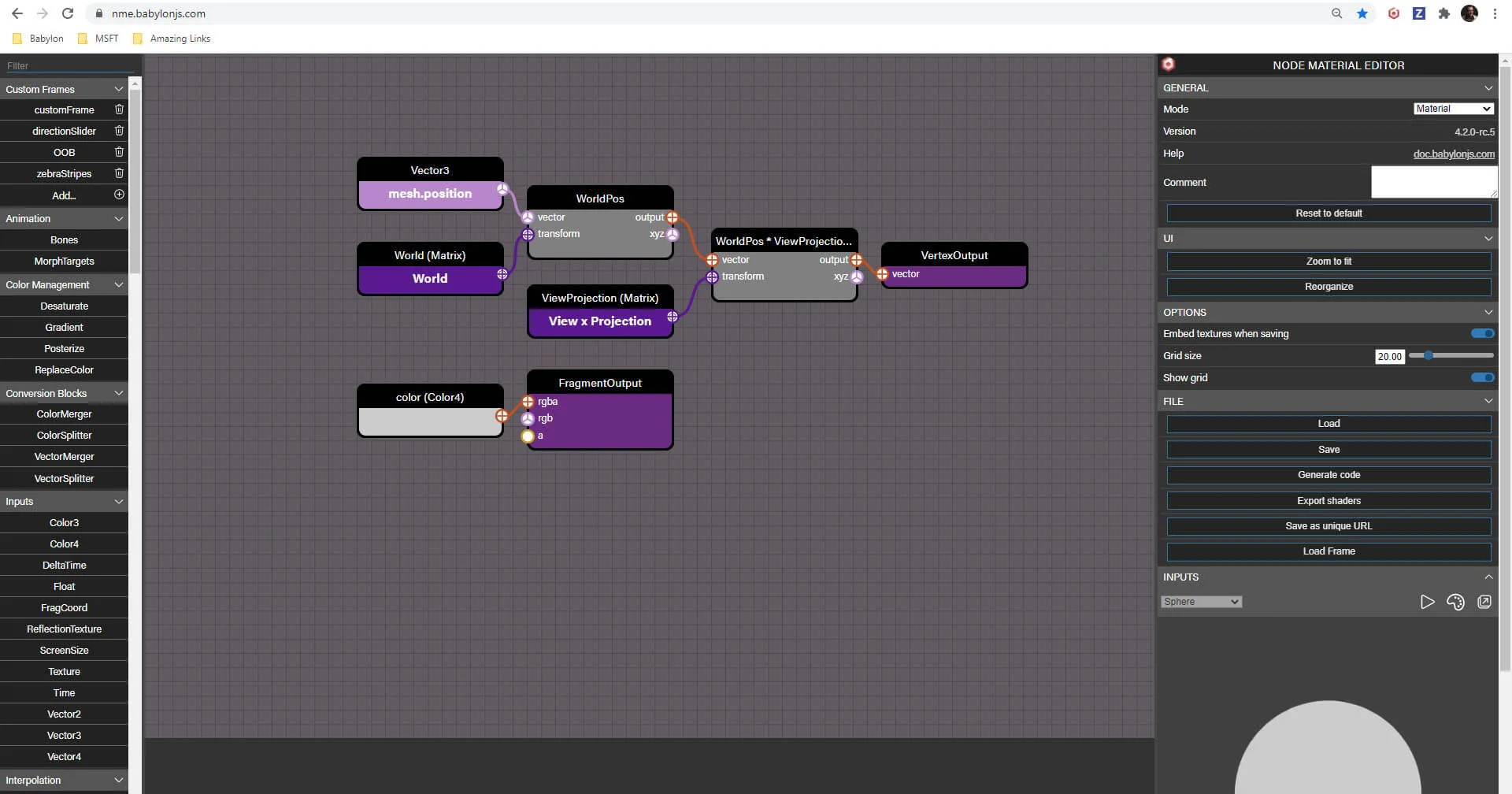
You can jump in and play around with it here: Node Material Editor
For an introductory look at the Node Material Editor, check out where it all started with this video:
When you're ready to learn more, head on over to the Node Material Documentation for more info.
You can also dive into the API that powers it all here: API documentation.
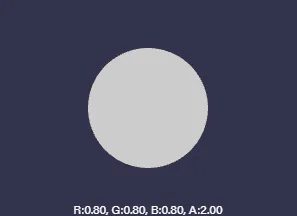
One handy tip in the Node Material Editor preview window is that you can CTRL+hover to see the RGB values.
Related videos
Further reading
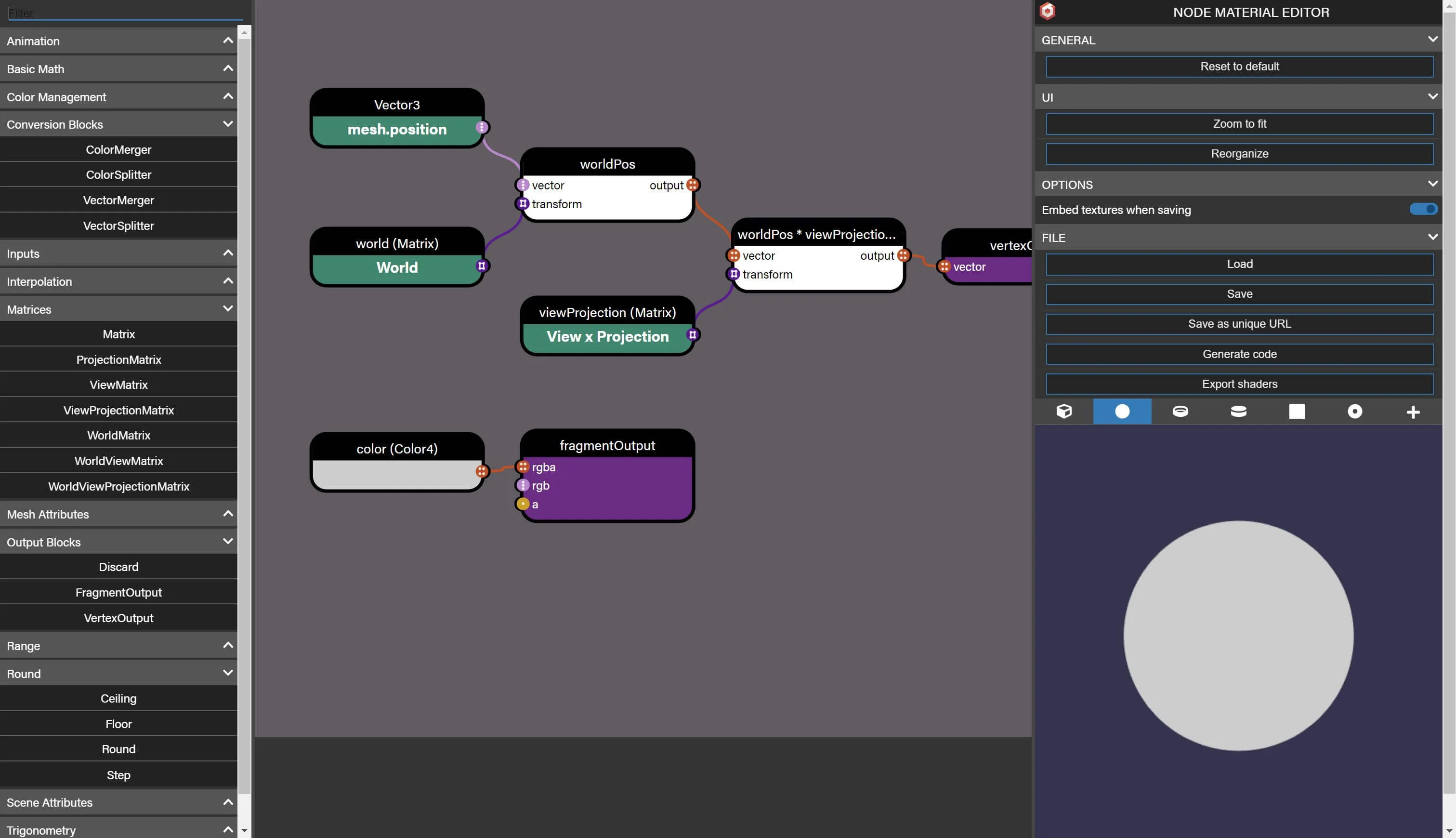
- Dedicated NME Forum Examples
- 3 Tips For Getting Started Building Procedural Node Material Shaders
- Mesh shattering with baked physics
- Fighting Self-Doubt, with Water
- Creating the Babylon.js Node Material
Coming next
Node Material Editor Custom Blocks
Learn all about how to create custom blocks in the super handy Node Material Editor.

Node Material Editor Custom Frames
Learn all about how to create custom frames in the super handy Node Material Editor.
Usage with the Smart Filter Editor
Learn how to create shader blocks for the Smart Filter Editor using Node Material Editor