# Implementing volumetric lighting with frame graphs
> Use a frame graph to implement volumetric lighting
Source: https://doc.babylonjs.com/features/featuresDeepDive/frameGraph/frameGraphExamples/frameGraphExampleVolumetricLighting
## Introduction
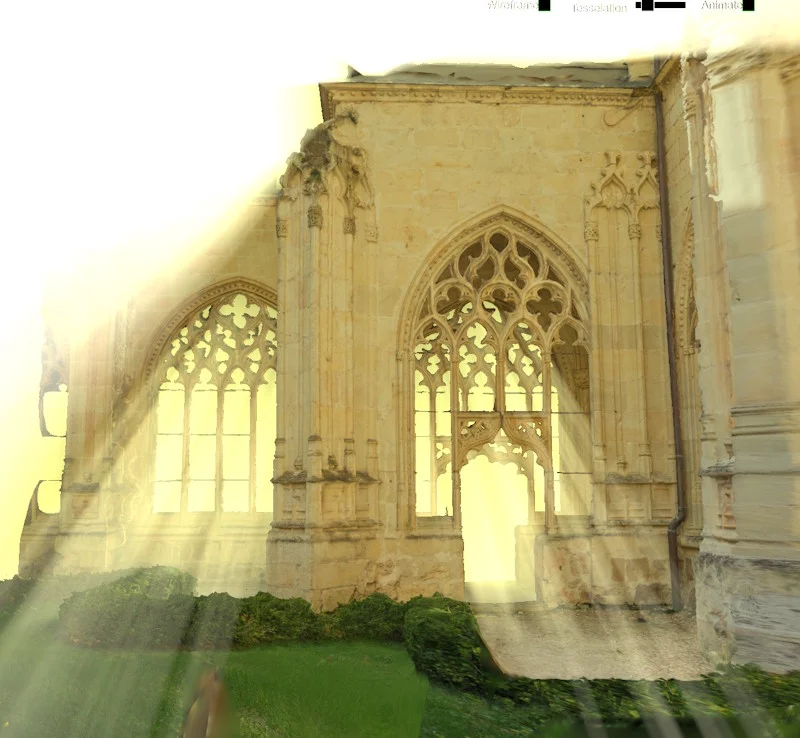
This page aims to implement volumetric-lighting post-processing “manually,” so you can see how to create custom frame graph tasks and custom nodes for use in a node render graph.
The resulting code/graphs are not intended for direct use: if you want to use volumetric lighting, it is already integrated into the [FrameGraphVolumetricLightingTask](https://doc.babylonjs.com/features/featuresDeepDive/frameGraph/frameGraphClassFramework/frameGraphTaskList#framegraphvolumetriclightingtask) task. Please refer to [this page](https://doc.babylonjs.com/features/featuresDeepDive/lights/volumetricLightScattering#the-volumetric-lighting-task) for more information on how to integrate this effect into your project.
The implementation is based on the article “Participating media using extruded light volumes” that you can find in [GPU Zen 1](https://www.amazon.com/GPU-Zen-Advanced-Rendering-Techniques/dp/0998822892). You can also find information in the [GDC slides](https://d29g4g2dyqv443.cloudfront.net/sites/default/files/akamai/gameworks/downloads/papers/NVVL/Fast_Flexible_Physically-Based_Volumetric_Light_Scattering.pdf).
## Creating the volumetric lighting task
You can refer to [Introduction to Frame Graph classes](https://doc.babylonjs.com/features/featuresDeepDive/frameGraph/frameGraphClassFramework/frameGraphClassOverview) for general information about the different classes of the frame graph framework.
### Class structure
Let's create the basic structure of the class:
```typescript
export class VolumetricLightingTask extends BABYLON.FrameGraphTask {
// TODO: Adds input and output properties
constructor(name: string, frameGraph: BABYLON.FrameGraph) {
super(name, frameGraph);
// TODO: Adds initialization code
}
public override isReady() {
// TODO: Checks if everything is ready for rendering
return true;
}
public override getClassName(): string {
return "VolumetricLightingTask";
}
public record(skipCreationOfDisabledPasses = false) {
// TODO: Creates passes
}
public override dispose() {
// TODO: Disposes resources
}
}
```
A frame graph task must extend the `BABYLON.FrameGraphTask` class (or `BABYLON.FrameGraphTaskMultiRenderTarget` if it renders to multiple render targets).
Implementing all methods in the above code is optional, except for `record`, for which you must provide an implementation.
Now let's implement all the “TODO” placeholders.
### Input and Output properties
The inputs of this class are:
```typescript
public targetTexture: BABYLON.FrameGraphTextureHandle;
public sourceSamplingMode = BABYLON.Constants.TEXTURE_BILINEAR_SAMPLINGMODE;
public depthTexture: BABYLON.FrameGraphTextureHandle;
public camera: BABYLON.Camera;
public lightingVolumeMesh: BABYLON.FrameGraphObjectList;
public light: BABYLON.DirectionalLight;
public lightingVolumeTexture?: BABYLON.FrameGraphTextureHandle;
private _extinctionPhaseG = new BABYLON.Vector4(0, 0, 0, 0);
public get phaseG() {
return this._extinctionPhaseG.w;
}
public set phaseG(value: number) {
this._extinctionPhaseG.w = value;
}
public get extinction() {
return new BABYLON.Vector3(this._extinctionPhaseG.x, this._extinctionPhaseG.y, this._extinctionPhaseG.z);
}
public set extinction(value: BABYLON.Vector3) {
this._extinctionPhaseG.x = Math.max(value.x, 1e-5);
this._extinctionPhaseG.y = Math.max(value.y, 1e-5);
this._extinctionPhaseG.z = Math.max(value.z, 1e-5);
}
private _lightPower = new BABYLON.Color3(1, 1, 1);
public get lightPower() {
return this._lightPower;
}
public set lightPower(value: BABYLON.Color3) {
this._lightPower.copyFrom(value);
}
```
It's quite simple.
Here are some explanations about these parameters:
* **targetTexture** is the texture in which the effect will be rendered. Like all textures used by a frame graph, it must be a `FrameGraphTextureHandle`, as explained in [Texture Handles](https://doc.babylonjs.com/features/featuresDeepDive/frameGraph/frameGraphClassFramework/frameGraphClassOverview#texture-handles).
* We need the scene's depth texture to correctly render the lighting volume, which is provided by the **depthTexture** property.
* The **camera** and **light** must also be provided.
* **lightingVolumeMesh** is the mesh we will render with the volumetric lighting material. Note that you can pass multiple meshes via this property; you are not limited to just one (`FrameGraphObjectList.meshes` is an array of meshes).
* **lightingVolumeTexture** is an optional texture that you can pass, which is used as an intermediate texture on which we render **lightingVolumeMesh**. This texture is then blended with the **targetTexture** texture. If you do not provide a texture, a new texture will be automatically created, with the same size, format, and type as **targetTexture**.
* **phaseG**, **extinction**, and **lightPower** are parameters that allow you to adjust the effect to your liking. Note that **extinction** cannot be *(0,0,0)*, because we divide by this value in the shader, hence the code in the setter method.
There is only one output:
```typescript
public readonly outputTexture: BABYLON.FrameGraphTextureHandle;
```
**outputTexture** is the only output parameter and, in our case, will be the same texture as **targetTexture**, but with a different handle! Although not strictly necessary, for tasks that perform rendering processing, it is recommended to output the texture that has been written, even if it has already been provided as input. This is because if a node rendering block (which extends the `NodeRenderGraphBlock` class) is created for this task, there must be a way to chain this block with the next block in the graph.
### Initialization code
The class uses other frame graph tasks as part of its implementation. It also uses a shader material to render the lighting volume mesh(es). Everything is initialized in the class constructor:
```typescript
private readonly _renderLightingVolumeMaterial: BABYLON.ShaderMaterial;
private readonly _clearLightingVolumeTextureTask: BABYLON.FrameGraphClearTextureTask;
private readonly _renderLightingVolumeTask: BABYLON.FrameGraphObjectRendererTask;
private readonly _blendLightingVolumeTask: VolumetricLightingBlendVolumeTask;
constructor(name: string, frameGraph: BABYLON.FrameGraph) {
super(name, frameGraph);
const isWebGPU = this._frameGraph.engine.isWebGPU;
this._renderLightingVolumeMaterial = new BABYLON.ShaderMaterial(`${name} - render lighting volume`, frameGraph.scene, "volumetricLightingRenderVolumeDemo", {
attributes: ["position"],
uniformBuffers: ["Scene", "Mesh"],
uniforms: ["world", "lightDir", "invViewProjection", "outputTextureSize", "extinctionPhaseG", "lightPower"],
samplers: ["depthTexture"],
shaderLanguage: isWebGPU ? BABYLON.ShaderLanguage.WGSL : BABYLON.ShaderLanguage.GLSL,
needAlphaBlending: true,
});
this._renderLightingVolumeMaterial.backFaceCulling = false;
this._renderLightingVolumeMaterial.alphaMode = BABYLON.Constants.ALPHA_ADD;
this._clearLightingVolumeTextureTask = new BABYLON.FrameGraphClearTextureTask(`${name} - clear lighting volume texture`, frameGraph);
this._renderLightingVolumeTask = new BABYLON.FrameGraphObjectRendererTask(`${name} - render lighting volume`, frameGraph, frameGraph.scene);
this._blendLightingVolumeTask = new VolumetricLightingBlendVolumeTask(`${name} - blend lighting volume`, frameGraph);
this.onTexturesAllocatedObservable.add(() => {
this._renderLightingVolumeMaterial.setInternalTexture("depthTexture", frameGraph.textureManager.getTextureFromHandle(this.depthTexture));
});
this.outputTexture = this._frameGraph.textureManager.createDanglingHandle();
// Triggers the setters to set the uniforms
this.phaseG = this.phaseG;
this.extinction = this.extinction;
this.lightPower = this.lightPower;
}
```
We simply create an instance of the classes we will use to implement the effect. Note that the `VolumetricLightingBlendVolumeTask` class will be detailed later (it simply blends the volumetric effect with the target texture).
#### Revisit the **phaseG**, **extinction** and **lightPower** setters implementation
Let's update the implementation of these properties, as these parameters are used by the material and by the `VolumetricLightingBlendVolumeTask` class:
```typescript
public set phaseG(value: number) {
this._extinctionPhaseG.w = value;
this._renderLightingVolumeMaterial.setVector4("extinctionPhaseG", this._extinctionPhaseG);
}
public set extinction(value: BABYLON.Vector3) {
this._extinctionPhaseG.x = Math.max(value.x, 1e-5);
this._extinctionPhaseG.y = Math.max(value.y, 1e-5);
this._extinctionPhaseG.z = Math.max(value.z, 1e-5);
this._renderLightingVolumeMaterial.setVector4("extinctionPhaseG", this._extinctionPhaseG);
this._blendLightingVolumeTask.postProcess.extinction.copyFromFloats(this._extinctionPhaseG.x, this._extinctionPhaseG.y, this._extinctionPhaseG.z);
}
public set lightPower(value: BABYLON.Color3) {
this._lightPower.copyFrom(value);
this._renderLightingVolumeMaterial.setColor3("lightPower", this._lightPower);
}
```
#### The **outputTexture** property
As you can see above, we created the output texture handle by calling:
```typescript
this.outputTexture = this._frameGraph.textureManager.createDanglingHandle();
```
`createDanglingHandle` creates a texture handle that is not yet associated with any texture. This will be done later, in the implementation of the `record()` method, with this code:
```typescript
this._frameGraph.textureManager.resolveDanglingHandle(this.outputTexture, this.targetTexture);
```
Here, we simply associate the handle **targetTexture** with **outputTexture**, so that, under-the-hood, both handles will point to the same texture.
Why do we do this and not just remove **outputTexture** to let the user use **targetTexture** whenever they want to reference the texture?
As explained above, we need the task to have an output when we implement the corresponding node's render block, so that the block can be chained with other blocks. This handle must exist as soon as the instance has been created (because we could access the **outputTexture** property right after creating an instance of the class), which is why it is created in the constructor. But at that point, **targetTexture** still has no value, which is why initialization is postponed until the implementation of `record()`.
#### Using the onTexturesAllocatedObservable observer
We use this code in the constructor:
```typescript
this.onTexturesAllocatedObservable.add(() => {
this._renderLightingVolumeMaterial.setInternalTexture("depthTexture", frameGraph.textureManager.getTextureFromHandle(this.depthTexture));
});
```
The `onTexturesAllocatedObservable` observer is notified after the graph has been constructed (the `record()` method of all tasks in the graph has been called) and after the GPU textures have been allocated (each texture handle is now associated with an `InternalTexture` instance). The lighting volume's render material needs the depth texture, so this is the right place to add code that retrieves the texture from the handle and assigns it to the **depthTexture** shader uniform.
### Updating the names of the class instances
As you can see in the constructor, we have given meaningful names to the `ShaderMaterial`, `FrameGraphClearTextureTask`, `FrameGraphObjectRendererTask`, and `VolumetricLightingBlendVolumeTask` instances, based on the name passed to the constructor. However, this name can be changed at any time via the **name** setter, so we need to override this function to update the name of these instances:
```typescript
public override get name() {
return this._name;
}
public override set name(name: string) {
this._name = name;
if (this._renderLightingVolumeMaterial) {
this._renderLightingVolumeMaterial.name = `${name} - render lighting volume`;
}
if (this._clearLightingVolumeTextureTask) {
this._clearLightingVolumeTextureTask.name = `${name} - clear lighting volume texture`;
}
if (this._renderLightingVolumeTask) {
this._renderLightingVolumeTask.name = `${name} - render lighting volume`;
}
if (this._blendLightingVolumeTask) {
this._blendLightingVolumeTask.name = `${name} - blend lighting volume`;
}
}
```
Note that in JavaScript, you cannot replace the setter function without also replacing the getter function (and vice versa), which is why we also had to reimplement the getter function.
### isReady and dispose implementation
The implementation of these methods is straightforward:
```typescript
public override isReady() {
return this._renderLightingVolumeMaterial.isReady() && this._clearLightingVolumeTextureTask.isReady() && this._renderLightingVolumeMaterial.isReady() && this._blendLightingVolumeTask.isReady()
}
public override dispose() {
this._renderLightingVolumeMaterial.dispose();
this._clearLightingVolumeTextureTask.dispose();
this._renderLightingVolumeTask.dispose();
this._blendLightingVolumeTask.dispose();
super.dispose();
}
```
### Implementation of the rendering passes
Let's move on to the main code, which is the implementation of the `record()` method. This method is responsible for creating the passes that will be executed when `FrameGraph.execute()` is called.
#### Initialization code
Before creating the passes, let's look at the initialization code for the `record()` method:
```typescript
if (this.targetTexture === undefined || this.depthTexture === undefined || this.camera === undefined || this.lightingVolumeMesh === undefined || this.light === undefined) {
throw new Error(`VolumetricLightingTask "${this.name}": targetTexture, depthTexture, camera, lightingVolumeMesh and light are required`);
}
this._frameGraph.textureManager.resolveDanglingHandle(this.outputTexture, this.targetTexture);
for (const mesh of this.lightingVolumeMesh.meshes) {
mesh.material = this._renderLightingVolumeMaterial;
}
```
First, we verify that all the parameters used in the implementation are correctly defined, then we associate the **targetTexture** handle with **outputTexture**, as explained above. We also define our custom material for the mesh(es) we are going to render in the lighting volume texture.
```typescript
const textureManager = this._frameGraph.textureManager;
let lightingVolumeTexture = this.lightingVolumeTexture;
if (!lightingVolumeTexture) {
const sourceTextureCreationOptions = textureManager.getTextureCreationOptions(this.targetTexture);
sourceTextureCreationOptions.options.samples = 1;
sourceTextureCreationOptions.options.labels = ["InScattering"];
lightingVolumeTexture = textureManager.createRenderTargetTexture(`${this.name} - lighting volume texture`, sourceTextureCreationOptions);
}
const volumeTextureSize = textureManager.getTextureAbsoluteDimensions(lightingVolumeTexture);
this._renderLightingVolumeMaterial.setVector2("outputTextureSize", new BABYLON.Vector2(volumeTextureSize.width, volumeTextureSize.height));
```
We now create the lighting volume texture if it has not already been provided via the **lightingVolumeTexture** property. We also set the uniform variable **outputTextureSize** required by the material.
The code should be self-explanatory, thanks to the helper functions of the texture management class.
#### Creation of the passes
First, we create a normal pass (i.e., not a render pass), which defines the uniforms used by the material that need to be updated on each frame:
```typescript
const InvViewProjectionMatrix = new BABYLON.Matrix();
const pass = this._frameGraph.addPass(this.name);
pass.setExecuteFunc(() => {
this.camera.getTransformationMatrix().invertToRef(InvViewProjectionMatrix);
this._renderLightingVolumeMaterial.setMatrix("invViewProjection", InvViewProjectionMatrix);
this._renderLightingVolumeMaterial.setVector3("lightDir", this.light.direction.normalizeToRef(BABYLON.TmpVectors.Vector3[0]));
});
```
To create a pass, we must use the corresponding method of the frame graph instance (`addPass()`, `addRenderPass()`, or `addObjectListPass()`) and not directly create an instance of the corresponding `XXXPass` class! This is because the pass must be added to the correct task, which is not necessarily the one from which the function call is executed: we will explain this in more detail below.
```typescript
this._clearLightingVolumeTextureTask.clearColor = true;
this._clearLightingVolumeTextureTask.color = new BABYLON.Color4(0, 0, 0, 1);
this._clearLightingVolumeTextureTask.targetTexture = lightingVolumeTexture;
this._clearLightingVolumeTextureTask.record(true);
this._renderLightingVolumeTask.targetTexture = this._clearLightingVolumeTextureTask.outputTexture;
this._renderLightingVolumeTask.objectList = this.lightingVolumeMesh;
this._renderLightingVolumeTask.camera = this.camera;
this._renderLightingVolumeTask.disableImageProcessing = true;
this._renderLightingVolumeTask.record(true);
this._blendLightingVolumeTask.sourceTexture = this._renderLightingVolumeTask.outputTexture;
this._blendLightingVolumeTask.sourceSamplingMode = this.sourceSamplingMode;
this._blendLightingVolumeTask.targetTexture = this.targetTexture;
this._blendLightingVolumeTask.depthTexture = this.depthTexture;
this._blendLightingVolumeTask.camera = this.camera;
this._blendLightingVolumeTask.record(true);
```
Here, we create the rendering passes. It is fairly simple, as we rely on existing tasks that already implement what we need:
* we clear the lighting volume texture using a `BABYLON.FrameGraphClearTextureTask` task
* we render the meshes in the lighting volume texture using a `BABYLON.FrameGraphObjectRendererTask` task
* we blend the lighting volume texture with the target texture using a `VolumetricLightingBlendVolumeTask` task (to be implemented below)
When we call the `record()` method on the various instances (**_clearLightingVolumeTextureTask**, **_renderLightingVolumeTask**, and **_blendLightingVolumeTask**), we execute their code that creates the (rendering) passes. This is why it is important to create a pass by calling the appropriate method of `FrameGraph` and not by creating an instance of the `XXXPass` classes:
* When `FrameGraph.build()` executes our `VolumetricLightingTask.record()` method, it first sets an internal variable (**_currentProcessedTask**) to the `VolumetricLightingTask` instance.
* When `FrameGraph.addPass()`, `FrameGraph.addRenderPass()`, or `FrameGraph.addObjectListPass()` is called, the pass is added to **_currentProcessedTask**.
Thanks to this mechanism, the passes created by the clear, render-objects, and blend tasks will be correctly added to the `VolumetricLightingTask` task and not to their respective tasks.
Note that we pass *true* to the **skipCreationOfDisabledPasses** parameter of the `record()` methods, because we don't want disabled tasks to be created: we will create a single disabled task ourselves in the code below:
```typescript
if (!skipCreationOfDisabledPasses) {
const disabledPass = this._frameGraph.addPass(this.name + "_disabled", true);
disabledPass.setExecuteFunc(() => {});
}
```
The implementation is a "no-op" implementation: if the task is disabled, we simply do nothing, and the target texture will not be updated.
## Creating the volumetric lighting blend volume task
This task is created as a post-processing task. Implementation is simplified thanks to the base class `FrameGraphPostProcessTask`:
```typescript
class VolumetricLightingBlendVolumeTask extends BABYLON.FrameGraphPostProcessTask {
public readonly override postProcess: VolumetricLightingBlendVolumeThinPostProcess;
public depthTexture: BABYLON.FrameGraphTextureHandle;
public camera: BABYLON.Camera;
constructor(name: string, frameGraph: BABYLON.FrameGraph) {
super(name, frameGraph, new VolumetricLightingBlendVolumeThinPostProcess(name, frameGraph.engine));
}
public record(skipCreationOfDisabledPasses = false): BABYLON.FrameGraphRenderPass {
if (this.sourceTexture === undefined || this.depthTexture === undefined || this.camera === undefined) {
throw new Error(`VolumetricLightingBlendVolumeTask "${this.name}": sourceTexture, depthTexture and camera are required`);
}
const pass = super.record(skipCreationOfDisabledPasses, undefined, (context) => {
this.postProcess.camera = this.camera;
context.bindTextureHandle(this._postProcessDrawWrapper.effect!, "depthSampler", this.depthTexture);
});
pass.addDependencies(this.depthTexture);
this.postProcess.outputTextureWidth = this._outputWidth;
this.postProcess.outputTextureHeight = this._outputHeight;
return pass;
}
}
```
This implementation is typical of a post-processing task:
* You implement the main post-processing code in a “thin post-process” class (here `VolumetricLightingBlendVolumeThinPostProcess`, which will be described below)
* You override the `record()` method to bind the texture uniform(s) used by your post-processing
The code above should be self-explanatory. Noteworthy is the fact that we indicate that this task/pass has a texture dependency on **depthTexture**, so we call `pass.addDependencies(this.depthTexture);`. Refer to [Task dependencies](https://doc.babylonjs.com/features/featuresDeepDive/frameGraph/frameGraphClassFramework/frameGraphClassOverview#task-dependencies) for more information about task dependencies.
`VolumetricLightingBlendVolumeThinPostProcess` is implemented as follows:
```typescript
class VolumetricLightingBlendVolumeThinPostProcess extends BABYLON.ThinPassPostProcess {
public camera: BABYLON.Camera;
public outputTextureWidth = 0;
public outputTextureHeight = 0;
public extinction = new BABYLON.Vector3(0, 0, 0);
private _invProjection: BABYLON.Matrix;
constructor(name: string, engine: BABYLON.Nullable = null, options?: BABYLON.EffectWrapperCreationOptions) {
super(name, engine, {
...options,
fragmentShader: "volumetricLightingBlendVolumeDemo",
samplers: ["depthSampler"],
uniforms: ["invProjection", "outputTextureSize", "extinction"],
defines: ["#define DUAL_SOURCE_BLENDING"],
});
this._invProjection = new BABYLON.Matrix();
this.alphaMode = BABYLON.Constants.ALPHA_DUAL_SRC0_ADD_SRC1xDST;
}
public override bind(noDefaultBindings = false) {
super.bind(noDefaultBindings);
const effect = this.drawWrapper.effect!;
this._invProjection.copyFrom(this.camera.getProjectionMatrix());
this._invProjection.invert();
effect.setMatrix("invProjection", this._invProjection);
effect.setFloat2("outputTextureSize", this.outputTextureWidth, this.outputTextureHeight);
effect.setVector3("extinction", this.extinction);
}
}
```
As you can see, the code is also simple:
* The post-processing has four input properties: **camera**, **outputTextureWidth**, **outputTextureHeight**, and **extinction**. The first three are set by the `VolumetricLightingBlendVolumeTask` task, and the last one by the main `VolumetricLightingTask` task.
* The `bind()` method is overridden to set the uniforms used by the shader, with the exception of texture uniforms, which are set by the task itself.
The last point explains why post-processes are now implemented via a “thin” base class: this class does not process texture properties, which allows it to be used in the context of the frame graph (which processes textures in its own way) and in a standard way, by implementing a regular post-process. Here, we have not implemented the “non-thin” version of the class, as it is only used in the context of the frame graph, but you can refer to any post-processing class in the framework to see how the thin post-processing class is used by the implementation.
## Creating the volumetric lighting node render block
Let's implement a node render block for `VolumetricLightingTask`, so that it can be used in a node render graph.
### Initialization of the class
```typescript
export class NRGVolumetricLightingBlock extends BABYLON.NodeRenderGraphBlock {
protected override _frameGraphTask: VolumetricLightingTask;
public override get task() {
return this._frameGraphTask;
}
public constructor(name: string, frameGraph: BABYLON.FrameGraph, scene: BABYLON.Scene) {
super(name, frameGraph, scene);
this.registerInput("target", BABYLON.NodeRenderGraphBlockConnectionPointTypes.AutoDetect);
this.registerInput("depth", BABYLON.NodeRenderGraphBlockConnectionPointTypes.AutoDetect);
this.registerInput("camera", BABYLON.NodeRenderGraphBlockConnectionPointTypes.Camera);
this.registerInput("lightingVolumeMesh", BABYLON.NodeRenderGraphBlockConnectionPointTypes.ObjectList);
this.registerInput("light", BABYLON.NodeRenderGraphBlockConnectionPointTypes.ShadowLight);
this.registerInput("lightingVolumeTexture", BABYLON.NodeRenderGraphBlockConnectionPointTypes.AutoDetect, true /** optional */);
this.target.addExcludedConnectionPointFromAllowedTypes(BABYLON.NodeRenderGraphBlockConnectionPointTypes.TextureAllButBackBuffer);
this.lightingVolumeTexture.addExcludedConnectionPointFromAllowedTypes(BABYLON.NodeRenderGraphBlockConnectionPointTypes.TextureAllButBackBuffer);
this.depth.addExcludedConnectionPointFromAllowedTypes(
BABYLON.NodeRenderGraphBlockConnectionPointTypes.TextureDepthStencilAttachment | BABYLON.NodeRenderGraphBlockConnectionPointTypes.TextureScreenDepth
);
this._addDependenciesInput();
this.registerOutput("output", BABYLON.NodeRenderGraphBlockConnectionPointTypes.BasedOnInput);
this.output._typeConnectionSource = () => {
return this.target;
};
this._frameGraphTask = new VolumetricLightingTask(name, frameGraph);
}
```
The class must extend `BABYLON.NodeRenderGraphBlock` to be usable in a node render graph.
The constructor registers the inputs and outputs, along with their allowed types. These are identical to the inputs and outputs of `VolumetricLightingTask`.
### Making properties available in the GUI
We now add the code to modify the various properties:
```typescript
/** Gets or sets the phaseG parameter */
@BABYLON.editableInPropertyPage("PhaseG", BABYLON.PropertyTypeForEdition.Float, "PROPERTIES", { min: -0.9, max: 0.9 })
public get phaseG(): number {
return this._frameGraphTask.phaseG;
}
public set phaseG(value: number) {
this._frameGraphTask.phaseG = value;
}
/** Gets or sets the extinction color */
@BABYLON.editableInPropertyPage("Extinction", BABYLON.PropertyTypeForEdition.Vector3, "PROPERTIES")
public get extinction(): BABYLON.Vector3 {
return this._frameGraphTask.extinction;
}
public set extinction(value: BABYLON.Vector3) {
this._frameGraphTask.extinction = value;
}
/** Gets or sets the light power */
@BABYLON.editableInPropertyPage("Light power", BABYLON.PropertyTypeForEdition.Color3, "PROPERTIES")
public get lightPower(): BABYLON.Color3 {
return this._frameGraphTask.lightPower;
}
public set lightPower(value: BABYLON.Color3) {
this._frameGraphTask.lightPower = value;
}
```
Thanks to the use of decorators, implementation is very simple, as you can see above: just write a getter/setter for each property and you're done!
### Adding getters to block inputs and outputs
Next, we have boilerplate code to provide access to the block's inputs and outputs:
```typescript
public override getClassName() {
return "NRGVolumetricLightingBlock";
}
public get target(): BABYLON.NodeRenderGraphConnectionPoint {
return this._inputs[0];
}
public get depth(): BABYLON.NodeRenderGraphConnectionPoint {
return this._inputs[1];
}
public get camera(): BABYLON.NodeRenderGraphConnectionPoint {
return this._inputs[2];
}
public get lightingVolumeMesh(): BABYLON.NodeRenderGraphConnectionPoint {
return this._inputs[3];
}
public get light(): BABYLON.NodeRenderGraphConnectionPoint {
return this._inputs[4];
}
public get lightingVolumeTexture(): BABYLON.NodeRenderGraphConnectionPoint {
return this._inputs[5];
}
public get output(): BABYLON.NodeRenderGraphConnectionPoint {
return this._outputs[0];
}
```
The index in the `_inputs` and `_outputs` arrays corresponds to the position of the corresponding variable registered in the constructor:
* **target** is registered first, so the index is 0
* **depth** is registered second, so the index is 1
* and so on
### Updating the properties of the frame graph task
We then need to update the task properties based on how the block inputs are connected:
```typescript
protected override _buildBlock(state: BABYLON.NodeRenderGraphBuildState) {
super._buildBlock(state);
this.output.value = this._frameGraphTask.outputTexture;
this._frameGraphTask.targetTexture = this.target.connectedPoint?.value as BABYLON.FrameGraphTextureHandle;
this._frameGraphTask.depthTexture = this.depth.connectedPoint?.value as BABYLON.FrameGraphTextureHandle;
this._frameGraphTask.camera = this.camera.connectedPoint?.value as BABYLON.Camera;
this._frameGraphTask.lightingVolumeMesh = this.lightingVolumeMesh.connectedPoint?.value as BABYLON.FrameGraphObjectList;
this._frameGraphTask.light = this.light.connectedPoint?.value as BABYLON.DirectionalLight;
this._frameGraphTask.lightingVolumeTexture = this.lightingVolumeTexture.connectedPoint?.value as BABYLON.FrameGraphTextureHandle;
}
```
### Serialization and parsing code
The last step is to implement code generation, serialization, and parsing:
```typescript
protected override _dumpPropertiesCode() {
const codes: string[] = [];
codes.push(`${this._codeVariableName}.phaseG = ${this.phaseG};`);
codes.push(`${this._codeVariableName}.extinction = new BABYLON.Vector3(${this.extinction.x}, ${this.extinction.y}, ${this.extinction.z});`);
codes.push(`${this._codeVariableName}.lightPower = new BABYLON.Color3(${this.lightPower.r}, ${this.lightPower.g}, ${this.lightPower.b});`);
return super._dumpPropertiesCode() + codes.join("\n");
}
public override serialize(): any {
const serializationObject = super.serialize();
serializationObject.phaseG = this.phaseG;
serializationObject.extinction = this.extinction.asArray();
serializationObject.lightPower = this.lightPower.asArray();
return serializationObject;
}
public override _deserialize(serializationObject: any) {
super._deserialize(serializationObject);
this.phaseG = serializationObject.phaseG;
this.extinction = BABYLON.Vector3.FromArray(serializationObject.extinction);
this.lightPower = BABYLON.Color3.FromArray(serializationObject.lightPower);
}
```
Note: Implementing `serialize` and `_deserialize` is mandatory for the block to work in NRGE (unlike `_dumpPropertiesCode` - but if you don't implement this method, the "Generate Code" button won't work as expected)!
Once again, the code is very simple: just serialize and parse the properties used by the post-process.
### Class registration
You must register this class in Babylon's class system:
```typescript
BABYLON.RegisterClass("BABYLON.NRGVolumetricLightingBlock", NRGVolumetricLightingBlock);
```
In order for your block to be discoverable by NRGE, you must add it to `NodeRenderGraph.CustomBlockDescriptions`:
```typescript
if (!BABYLON.NodeRenderGraph.CustomBlockDescriptions.find((desc) => desc.name === "Volumetric_Lighting")) {
BABYLON.NodeRenderGraph.CustomBlockDescriptions.push({
name: "Volumetric_Lighting",
description: "Render Volumetric Lighting",
menu: "Demo",
factory: (frameGraph: BABYLON.FrameGraph, scene: BABYLON.Scene) => new NRGVolumetricLightingBlock("Volumetric Lighting", frameGraph, scene),
});
}
```
Note: Since a playground can be launched multiple times, we first check whether the block has already been added to the array during a previous execution. In a real project, this check is probably unnecessary, as you would refresh the page after updating your code.
## Putting it all together
This PG uses the classes described on this page:
- [Playground: Implementing volumetric lighting](https://playground.babylonjs.com/#U9RNJ9#5) - Implementing volumetric lighting with frame graphs
You can choose to run the NRG version by setting **useNodeRenderGraph** to *true* in the **index.ts** file.